
Unlocking Private Sector Growth in Ethiopia’s Seed Industry: Results from the Ethiopian Seed Partnership
Strengthening Ethiopia’s Seed Sector through Private Sector Development: The Ethiopian Seed Partnership Experience
The Ethiopian Seed Partnership (ESP), building on the Ethiopian–Netherlands Seed Partnership launched in 2021, is strengthening Ethiopia’s seed sector so that small-scale food producers across the country can access high-quality seed of well-adapted varieties essential for food security, nutrition, and climate resilience. ESP is implemented by Wageningen University & Research, SWR-Ethiopia, RSLNC Consultancy, and Mercy Corps, and co-funded by the Embassy of the Kingdom of the Netherlands and the European Union.
One of the major pillars of ESP’s work is private sector development. ESP is promoting two complementary approaches: strengthening Ethiopian seed companies and promoting partnerships with international seed companies.
Through direct support to 15 Ethiopian seed companies, the partnership has helped seed companies grow their business and diversify seed production of 22 crops and over 70 varieties. These companies have increased their certified seed production by adding 9,650 tons of seed to the market. This quality seed is reaching 812,400 farmers, who expected to increase productivity by around 20% through improved varieties and good quality seed.
This growth is not only increasing variety choices and seed availability for farmers; it is also strengthening the long-term capacity of Ethiopia’s private seed sector. One of the biggest constraints facing seed companies is limited access to finance. To address this, ESP and Awash Bank jointly developed the Guarantee to Grant (G2G) facility, a financial product that helps partner seed companies strengthen their collateral position and secure larger loans. This enables them to expand production and invest in machinery, irrigation, and improved infrastructure.
ESP is also working closely with the Ethiopian Agricultural Authority and government bodies on seed regulatory reforms that support private sector growth, including measures that make it easier for companies to register and commercialize their own varieties.
One example is Borer Agricultural Development PLC. Its General Manager, Ato Omer Mohammed, operates a 254-hectare farm in Abeshige woreda of Gurage Zone in Central Ethiopia, producing seed of maize, common bean, teff, chickpea, and sunflower. Over the past three years, the company has expanded its annual seed production to 840 tons. Through linkages facilitated by ESP with the International Institute of Tropical Agriculture (IITA) in Nigeria and a private seed company in Zimbabwe, the company is now registering its own maize and soybean varieties. With support from the G2G facility, Borer Agricultural Development PLC secured a loan of ETB 12 million to purchase seed and fertilizer and invest in irrigation. The company has also introduced measures to promote gender equality, improve workplace safety for female employees, and increase female representation in management positions.
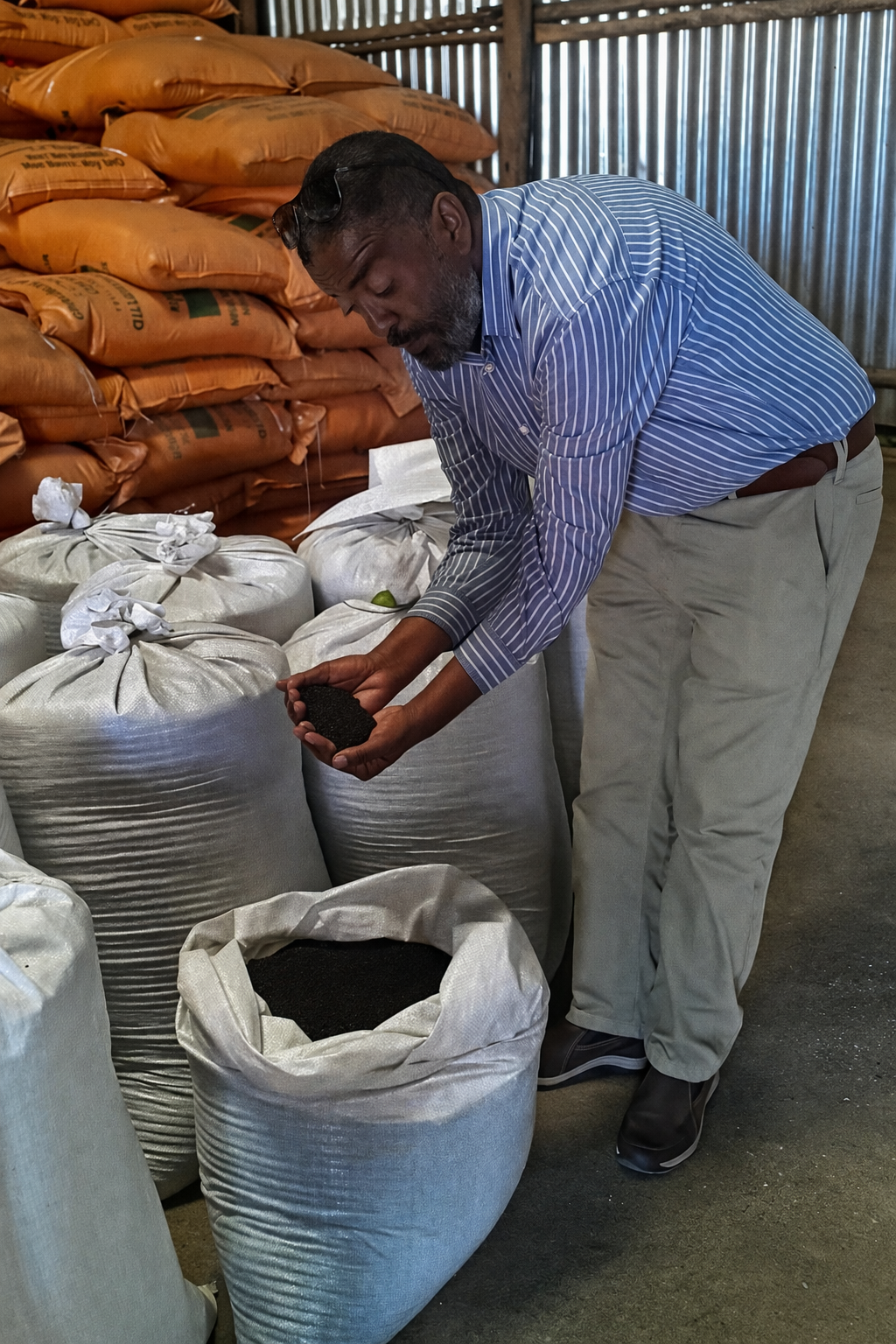
Photo: Ato Omer Mohammed, General Manager of Borer Agricultural Development PLC, displays the common bean variety ‘Hawassa Dume’ during a field visit in Abeshige woreda, highlighting the growth of local seed companies supported by the Ethiopian Seed Partnership.
ESP’s other approach has been to promote partnership models with international seed companies. Through these partnerships, seven Dutch seed companies have collaborated in variety testing, variety registration, demonstration, and commercial promotion. This collaboration has already led to the registration of 13 new crop varieties. Field demonstrations have reached 28,300 farmers, nearly 30% of them women, and showcased 30 improved varieties across 10 vegetable crops, including tomato, onion, pepper, cabbage, watermelon, and carrot. These demonstrations have enabled Ethiopian farmers to compare varieties, observe performance under local conditions, and make informed choices.
Building on the success of this first round of partnerships, ESP expanded by partnering with six additional international seed companies focusing on oilseeds, pulses, fodder, and forage crops. The collaborating seed companies have also promoted sustainable agricultural practices, including crop rotation, safer pesticide use, natural pest management, and the use of personal protective equipment. In addition, international and domestic seed companies have supported internships and on-the-job training for youth graduating from ESP-supported scholarship programmes at Haramaya University and Bahir Dar University. By 2025, the private seed sector had supported 121 internships, with 38 young graduates securing permanent jobs in host companies.

Photo: Demonstration field showcasing a range of vegetable crops introduced through international seed company partnerships, enabling Ethiopian farmers to compare varieties and adopt improved seeds suited to local conditions.
These achievements show that private sector development is transforming Ethiopia’s seed sector. By strengthening local seed companies and building international partnerships, ESP is expanding access to quality seed, improving business growth, creating jobs, increasing farmers’ productivity and resilience.
***
Source: This story is authored by Embassy of the Netherlands.