
From Fragmented Farms to Thriving Clusters: Transforming Ethiopian Agriculture at Scale
The Agricultural Commercialisation Clusters (ACC) Programme was implemented between November 2019 and July 2025 with a total budget of USD 126 million. It was supported by five development partners: Denmark, the Netherlands, the European Union Delegation to Ethiopia, Norway, and the French Development Agency. The programme was rolled out across the regions of Amhara, Central Ethiopia, Oromia, Sidama, South-West Ethiopia, and Tigray.
At the core of the programme is an innovative approach that clusters smallholder farmers—typically cultivating an average of two hectares—into coordinated production systems. While still relatively new, this model has significantly expanded access to irrigation, mechanisation, improved inputs, storage facilities, and timely market and production information through IT-based systems.
By combining farmer clustering with a value chain approach, the ACC Programme has strengthened knowledge sharing, improved access to finance, enhanced market linkages, and encouraged active private sector engagement in agriculture. In addition, carefully designed climate-smart interventions have increased farmers’ resilience to climate change while boosting productivity and overall production.
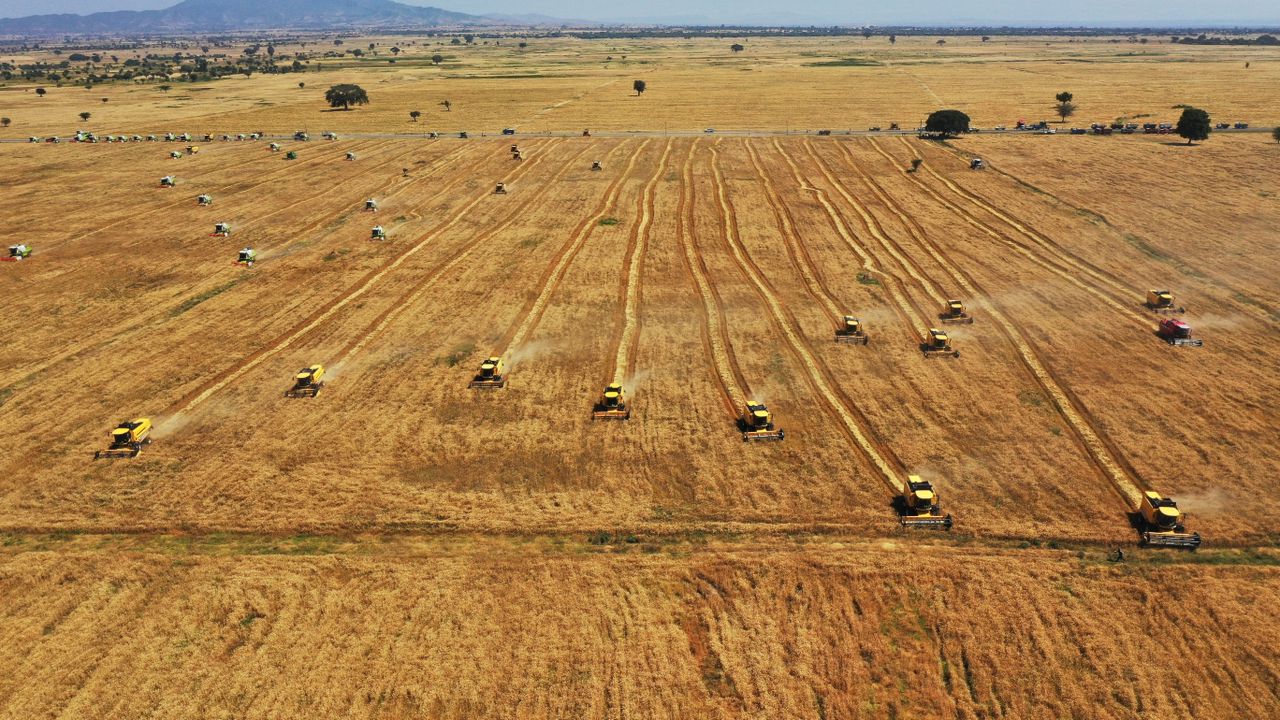
Photo: Tractors prepare clustered farmland under the Agricultural Commercialisation Clusters (ACC) Programme
The programme focused on eleven priority crops, including teff, wheat, maize, barley, sesame, soybean, banana, mango, avocado, tomato, and onion, creating targeted employment opportunities for women and youth along the value chain.
Organising smallholder farmers into production groups and consolidating fragmented farmland into unified production systems has proven to be a practical and widely accepted strategy. Over the course of the programme, the Agriculture Transformation Institute (ATI), in collaboration with a wide range of implementing partners, facilitated the organisation of 2.43 million farmers into 99,000 Farmer Production Clusters. These farmers adopted recommended production packages across all targeted commodities.
Although led and facilitated by ATI, the ACC Programme represents a collective effort involving multiple stakeholders. ATI developed user-friendly, IT-based information systems to provide farmers with critical data for production and marketing. Research centres, supported by ATI, introduced climate-resilient crop varieties and improved farming technologies. The programme also worked with banks, microfinance institutions, cooperatives, and private sector actors to expand financial services, enabling greater access to inputs, mechanisation, and aggregation services. In parallel, the Ministry of Agriculture at various levels was supported to promote the adoption of modern farming practices.
This coordinated approach delivered significant results. Farmers’ incomes increased by an average of 19%, driven by productivity gains of 15% in grains and 278% in horticulture. Marketable surplus rose by 58%, contributing to improved national food availability. The programme also created approximately 158,000 jobs along agricultural value chains, particularly benefiting women and youth. In addition, 1.88 million hectares of land were brought under climate-smart production practices, supporting Ethiopia’s green development agenda.
The success of the ACC Programme has prompted the Government of Ethiopia to scale up the model nationwide, with plans to reach an additional 8.6 million farmers. The programme has also contributed to the expansion of logistics services, including input and output transportation, storage, and processing facilities, helping transform rural areas into emerging aggregation and market centres.
***
Source: This story is authored by Denmark in Ethiopia.