
From Regulation to Results: Modernizing Ethiopia’s Seed System through Digital Certification and Reform
The Ethiopian Seed Partnership (ESP), building on the Ethiopian–Netherlands Seed Partnership launched in 2021, is strengthening Ethiopia’s seed sector so that small-scale food producers across the country can access high-quality seed of well-adapted varieties needed for food security, nutrition, and climate resilience. ESP is implemented by Wageningen University & Research, SWR-Ethiopia, RSLNC Consultancy, and Mercy Corps, and co-funded by the Embassy of the Kingdom of the Netherlands and the European Union.
One of the major focus ESP’s works is strengthening the seed regulatory system to create a better environment for the seed sector. A well-organized regulatory system is important for supporting seed businesses and ensuring that farmers have access to quality seed. To support this, ESP has supported improve seed regulations, strengthen regulatory services, and build seed laboratories capacity through training, technical support, and equipment.
One of the most important regulatory innovations introduced by ESP has been the use of a digital barcode system for seed certification. The system was first piloted for hybrid maize in the Amhara, Oromia, and Central Ethiopia regions. Under this system, each certified seed lot receives a unique barcode. The barcode contains key information, including crop type, variety name, producer details, lot number, testing laboratory, and production year. Inspectors can easily verify seed authenticity during field inspections and market monitoring using simple scanning tools.

Photo: Farmers and agricultural experts participate in a field visit under the Ethiopian Seed Partnership, showcasing improved seed varieties and strengthening linkages between research, regulation, and on-the-ground application.
The results have been significant. By 2025, the barcode system had expanded to seven regional states and covered 16 crops. In that year alone, more than 2.3 million barcode tags were issued, showing strong adoption by regulators and seed producers. The system has reduced the chance for counterfeit seed to enter the market and has increased farmer confidence in certified seed. It has also reduced delays linked to manual tagging, making certification faster, more reliable, and more transparent. In this way, the barcode system has improved trust among farmers and stakeholders and increased efficiency in the seed supply chain.
Another major achievement of ESP has been its support for establishing an independent variety testing system. In the past, variety testing in Ethiopia was carried out only by research institutions. This created concerns about impartiality and also increased trial management costs for seed companies. To address these issues, ESP supported the development of an independent variety testing system guided by the newly approved Plant Variety Release and Registration Directive No. 1065/2025. This directive provides a clear legal framework for variety testing and variety release. Under this system, the Ethiopian Agricultural Authority (EAA) is expected to independently conduct National Performance Trials and Distinctness, Uniformity, and Stability tests for the release and registration of varieties. This helps ensure a standardized and transparent process.
ESP’s technical support and policy engagement played an important role in making this system operational. Capacity-building support helped crop breeders and EAA officials strengthen their skills to implement the tests effectively. In addition, the recruitment of a dedicated plant breeder by the EAA further strengthened the technical implementation of the new system.
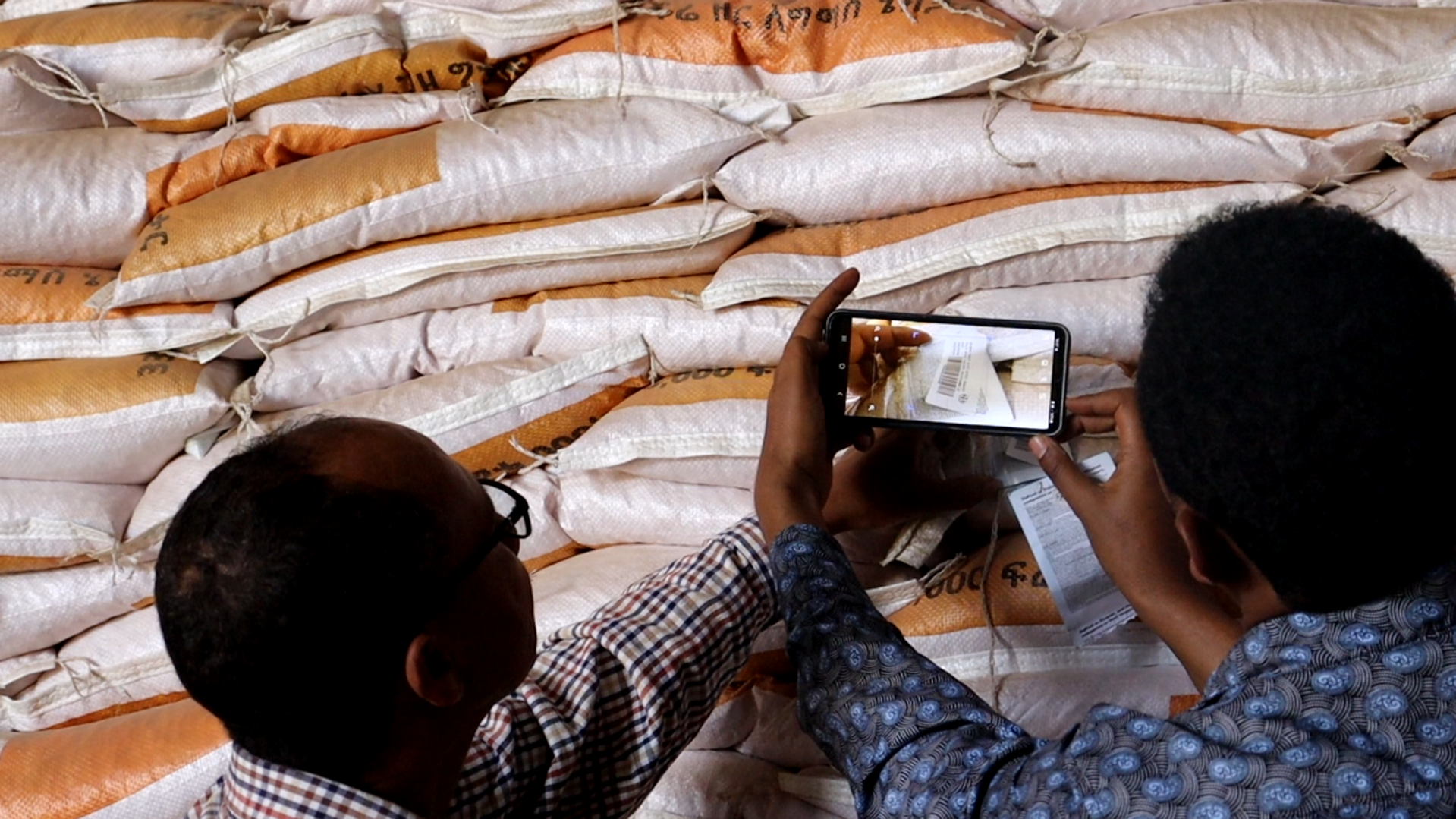
Photo: Inspectors use a digital barcode scanning system to verify certified seed information, demonstrating an innovative approach introduced by ESP to enhance traceability, reduce counterfeit risks, and improve trust in Ethiopia’s seed system.
The results of this intervention are already visible. Four bread wheat varieties developed by public research institutions and three tomato varieties from private seed companies have successfully passed through the improved testing system and were approved by the National Variety Release Committee. This is an important step because it shows that the new system is working and that it is inclusive. Public and private actors now have equal opportunities to take part in a fair and transparent evaluation process. The approach is also being expanded to other crops such as barley and durum wheat, which will further increase its reach and impact.
Overall, ESP has made an important contribution to seed sector transformation in Ethiopia. The barcode-based certification system has improved traceability, reduced counterfeit risks, and increased efficiency in seed certification. At the same time, the independent variety testing system has promoted transparency, fairness, and inclusion in the approval of new varieties.
***
Source: This story is authored by Embassy of the Netherlands.